April 1, 2025
ToolsBest apps for practicing ATC communications in 2024
A comprehensive review of the top ATC practice apps including Plane English, ARSim, and ATC One. Compare features, AI quality, and effectiveness.
A complete guide covering everything you need to know. Estimated reading time: 15 min read.
Radio communications are often the biggest source of anxiety for student pilots. The good news: you can now practice ATC communications anytime, anywhere using your smartphone.
But which app is actually worth your time and money? This comprehensive guide reviews the top ATC practice apps available in 2024.
What to look for in an ATC practice app
Before diving into specific apps, here's what separates a good ATC app from a great one:
1. True AI vs scripted responses
Scripted apps: Follow pre-programmed decision trees. Say the wrong thing, and they break.
True AI apps: Use advanced language models to understand your intent, even if phrasing isn't perfect. They respond like real controllers.
2. Scenario variety and quality
- How many scenarios are available?
- Do they cover your specific training needs?
- Are they regularly updated?
3. Realism
- Background cabin noise
- Radio static
- Controller accent and speech patterns
- Detection of pilot deviations
4. Feedback quality
- Does it just say "correct" or "incorrect"?
- Does it explain WHY something was wrong?
- Does it teach you the proper phraseology?
5. Customization
- Can you adjust difficulty?
- Can you customize radio quality, static, background noise?
- Can you practice specific airports or situations?
Now let's review the top apps based on these criteria.
The top ATC practice apps
1. ATC One ⭐⭐⭐⭐⭐
Platform: iOS, Android Price: Freemium (free scenarios + premium subscription) AI Quality: True AI (GPT-4 based)
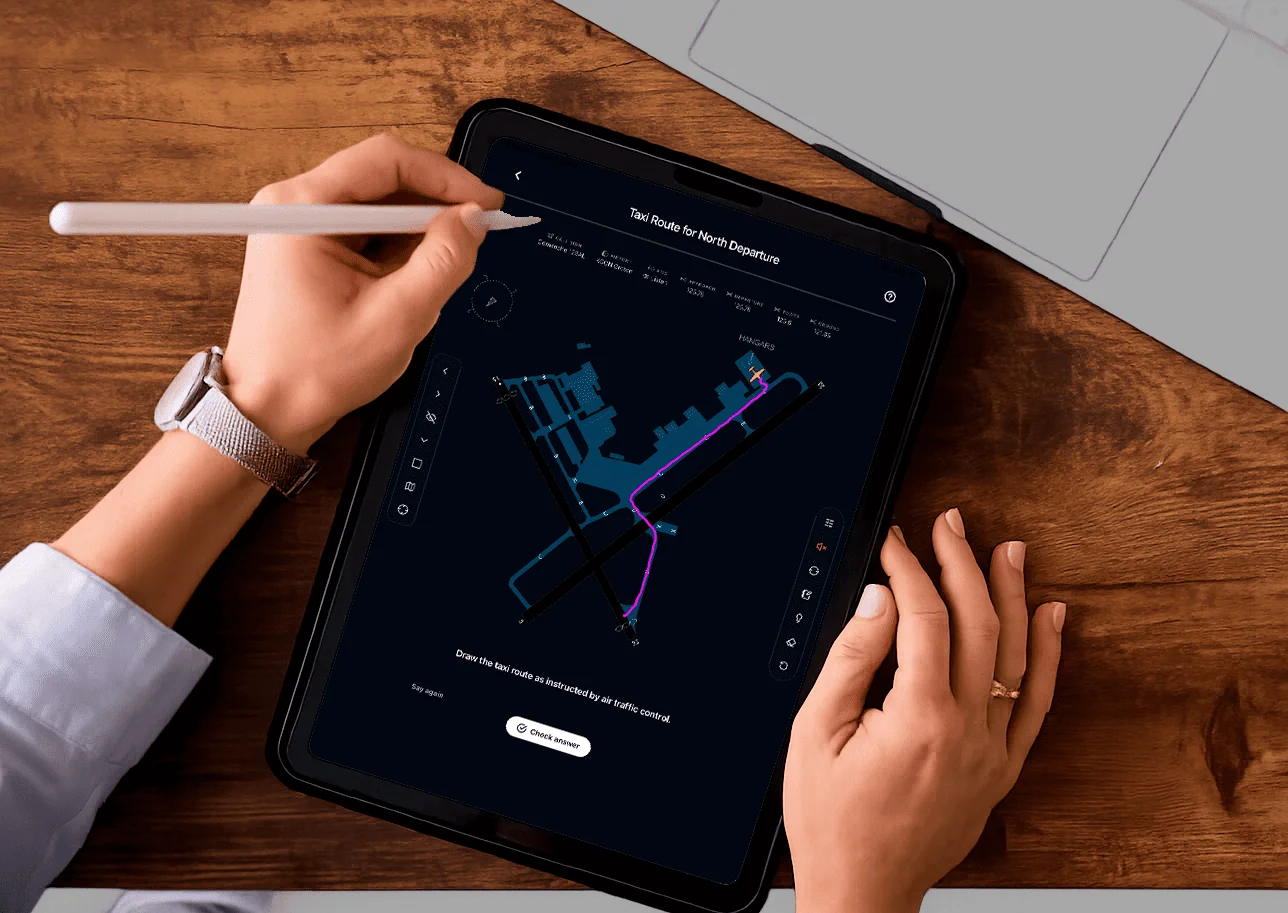
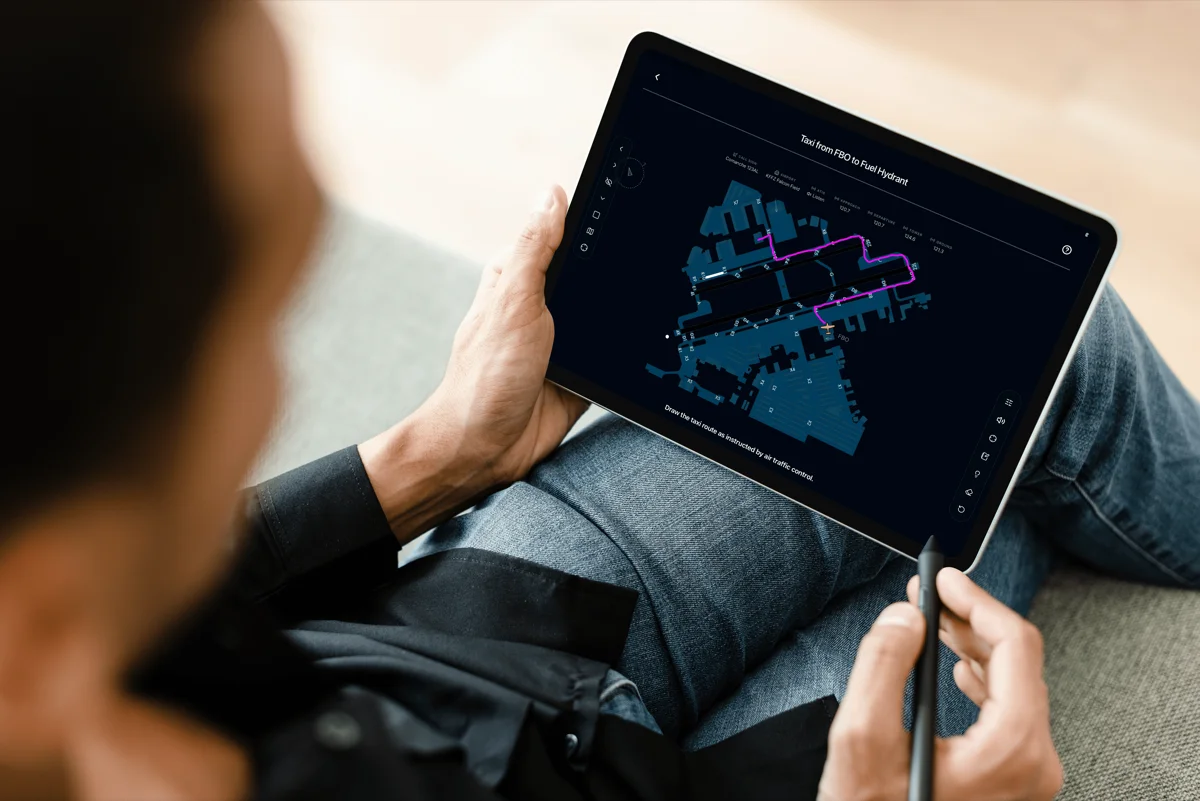
Strengths: - Cutting-edge AI technology - Uses GPT-4 based models, so it understands your intent even if your phraseology isn't perfect - Unmatched realism - Cabin background noise, adjustable radio static, natural controller voices - Automatic pilot deviation detection - The app actually catches when you make mistakes (like reading back wrong altitudes) - Extensive scenario library - Hundreds of scenarios from basic pattern work to complex IFR approaches - Personalized feedback - AI analyzes your communication and provides specific improvement suggestions - Highly customizable - Adjust radio quality, background noise, controller speed, difficulty level - Real airports - Practice at actual airports you'll fly to - Progressive difficulty - Scenarios adapt to your skill level
Weaknesses: - Premium features require subscription - Can be overwhelming for absolute beginners (though beginner mode helps)
Best for: Serious student pilots and certificated pilots who want the most realistic practice available.
Verdict: The gold standard for ATC practice. If you're serious about mastering radio communications, this is the app to use.
2. Plane English ⭐⭐⭐½
Platform: iOS Price: One-time purchase AI Quality: Scripted responses with some flexibility
Strengths: - Simple, clean interface - Good for learning basic phraseology patterns - Affordable one-time purchase - Decent scenario coverage for VFR operations
Weaknesses: - Scripted responses mean you must say things exactly as programmed - Limited scenario variety compared to AI-based apps - No background noise or environmental realism - Doesn't detect subtle pilot deviations - Feedback is basic (correct/incorrect) - Cannot customize radio quality or environment
Best for: Budget-conscious students who want basic phraseology practice.
Verdict: A solid entry-level app for learning standard phrases, but limited by its scripted nature.
3. ARSim (Air Radio Simulator) ⭐⭐⭐
Platform: iOS, Android Price: Free with in-app purchases AI Quality: Pattern-matching (not true AI)
Strengths: - Free to try - Covers basic VFR scenarios - Simple to use - Good for memorizing standard calls
Weaknesses: - Pattern-matching often fails with non-standard (but correct) phraseology - Very limited scenario library - No environmental sounds or realism - Feedback is minimal - Interface feels dated - No customization options
Best for: Complete beginners who want to try ATC practice for free before committing.
Verdict: A decent starting point, but you'll quickly outgrow it.
4. Say Intentions ⭐⭐⭐
Platform: Web-based Price: Free AI Quality: Pre-recorded audio with text recognition
Strengths: - Completely free - Web-based (no download required) - Uses real ATC recordings - Good for familiarizing yourself with ATC rhythm and cadence
Weaknesses: - Pre-recorded audio means limited interactivity - You're just repeating what you hear, not practicing decision-making - No feedback on your performance - Very limited scenario coverage - No progression or skill tracking
Best for: Students who want to hear what real ATC sounds like.
Verdict: Useful supplement for listening practice, but not a complete training tool.
Detailed comparison: ATC One vs Plane English vs ARSim
| Feature | ATC One | Plane English | ARSim |
|---|---|---|---|
| AI Technology | GPT-4 based | Scripted | Pattern-matching |
| Scenario Count | 200+ | ~40 | ~15 |
| Background Noise | Yes, adjustable | No | No |
| Radio Static | Yes, adjustable | No | No |
| Pilot Deviation Detection | Yes | No | No |
| Personalized Feedback | Detailed AI analysis | Basic correct/incorrect | Minimal |
| Real Airport Practice | Yes | Limited | No |
| IFR Scenarios | Yes | No | No |
| Customization | Extensive | None | None |
| Updates | Regular new scenarios | Occasional | Rare |
| Price | Freemium | $14.99 one-time | Free + IAP |
Why true AI matters
The difference between scripted apps and true AI apps is massive.
Scripted app example:
You say: "Oakland Tower, Cessna 34 Bravo, left downwind, runway 27 right."
App response: "ERROR. Please say exactly: 'Oakland Tower, Cessna 1234 Bravo, left downwind, runway 27 right.'"
The app breaks because you shortened your callsign (which is actually correct after initial contact).
True AI example (ATC One):
You say: "Oakland Tower, Cessna 34 Bravo, left downwind, runway 27 right."
App response: "Cessna 34 Bravo, runway 27 right, cleared to land, number two following a Boeing on a 3-mile final."
The AI understands what you meant, just like a real controller would.
This matters because in real aviation, there are often multiple correct ways to say something. True AI handles this; scripts don't.
The customization advantage
One underrated feature is customization. Real radio communications vary widely:
- Busy tower: Fast-talking controllers, lots of traffic
- Quiet tower: Slower pace, more detailed instructions
- Poor radio: Static makes understanding difficult
- Cabin noise: Wind, engine sounds affect your concentration
Apps like ATC One let you adjust all of these variables to match real conditions. This prepares you for actual flight much better than pristine, scripted audio.
Realistic scenario progression
The best apps (particularly ATC One) offer progressive scenarios:
Level 1: Basic pattern work at non-towered airport Level 2: Towered airport with light traffic Level 3: Class C transitions Level 4: Class B operations with complex routing Level 5: IFR operations and unusual situations
This mirrors real training progression and keeps you challenged.
The pilot deviation detection difference
One feature that sets ATC One apart: it actually catches your mistakes in real-time.
Examples: - You read back altitude as "3,500" when cleared to "4,500" → App catches it - You forget to read back a hold-short instruction → App prompts you - You use incorrect phraseology → App corrects and teaches proper format
This is incredibly valuable because in real flight, ATC will catch these errors. Practicing with an app that does the same builds better habits.
Which app should you choose?
If you're a serious student pilot: Choose ATC One. The investment in premium features pays off in time saved with your CFI and confidence gained.
If you're on a tight budget: Start with ARSim (free) or Plane English (one-time purchase). Use these to learn basic patterns, then upgrade to ATC One when ready to advance.
If you're a CFI: Recommend ATC One to your students. The quality of students' radio work will improve dramatically, saving you time and frustration.
If you're preparing for checkride: Use ATC One for scenario-based practice. Practice the exact scenarios you'll encounter on your checkride until they're second nature.
Beyond apps: other practice methods
Apps are powerful, but combine them with:
1. LiveATC.net Listen to real ATC communications at airports you'll fly to. Free and invaluable.
2. Flight simulators Microsoft Flight Simulator and X-Plane with VATSIM or PilotEdge provide live human ATC.
3. Ground practice with CFI Use apps to prepare, then role-play with your CFI to refine.
4. Recording your actual flights Record your radio communications and review them. You'll catch things you missed in the moment.
The ROI of ATC practice apps
Consider this: - Flight training: $150-200/hour - Ground instruction: $50-75/hour - ATC practice app: $10-20/month
If an app saves you even ONE flight hour by improving your radio work, it's paid for itself many times over.
Most student pilots report that consistent app practice saves them 3-5 flight hours. That's $450-1,000 in savings.
How to maximize app effectiveness
1. Practice daily
Even 10 minutes per day is more effective than 1 hour once per week.
2. Start easy, progress gradually
Don't jump to complex scenarios before mastering basics.
3. Review feedback carefully
Don't just move on after completing a scenario. Read the feedback, understand corrections.
4. Practice what you'll fly
Before a cross-country, practice those specific airport communications.
5. Use it before and after real flights
Before: Practice the airports you'll visit After: Practice any situations that were challenging
The future of ATC practice
AI technology is advancing rapidly. Expect future versions to include: - Video scenarios with visual cues - Integration with VR headsets - Even more realistic controller personalities - Multiplayer scenarios with other students - CFI oversight and progress tracking
ATC One is already leading in most of these areas, with regular updates adding new capabilities.
Conclusion
The best app for practicing ATC communications in 2024 is ATC One, thanks to its true AI technology, extensive scenario library, unmatched realism, and powerful customization options.
For budget-conscious students, Plane English offers decent basic practice, while ARSim provides a free entry point.
But if you're serious about aviation and want to build real-world communication skills, invest in a tool that uses genuine AI and offers professional-grade training scenarios.
Action item: Download one of these apps this week. Start with basic scenarios and practice for 10 minutes daily. Track your progress for one month and notice the difference in your communication confidence.
Ready to practice what you just learned?
Reading is great, but real improvement comes from practice. ATC One lets you practice these exact scenarios with AI-powered voice recognition. Get instant feedback, build confidence, and master communications before your next flight.