
April 1, 2024
Student pilotsYour first radio call: what to say and how to say it
The first time you press PTT is intimidating. This step-by-step guide prepares you for your first ATC communication with total confidence.
A complete guide covering everything you need to know. Estimated reading time: 8 min read.
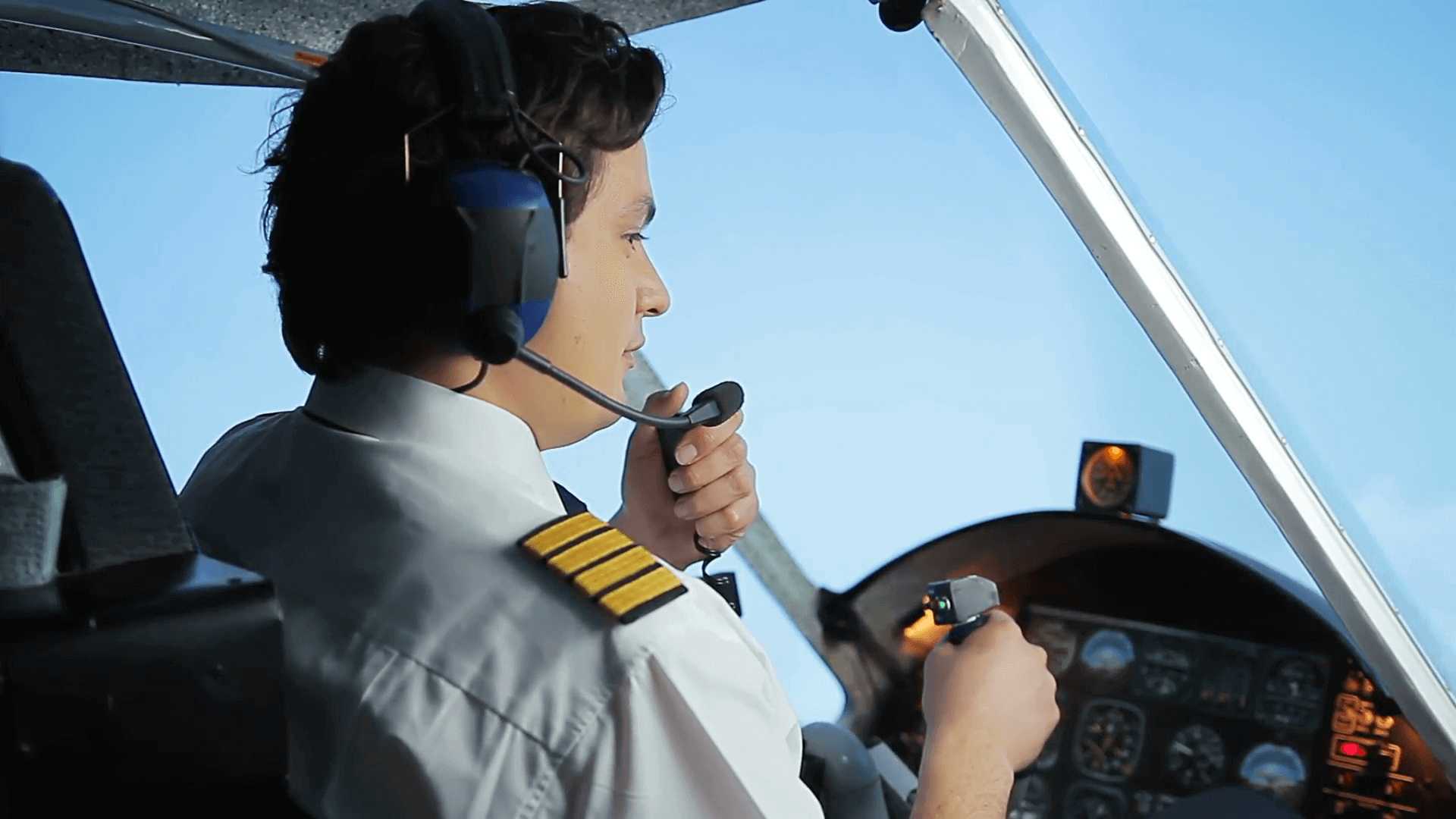
I'll never forget my first radio call. Hands sweating, heart racing, staring at the PTT like it was going to bite me.
I pressed the button and said: "Uh... Tower... this is... um... Cessna... wait..."
Click. I released the button. Deeply embarrassed.
My instructor looked at me with a smile and said: "Perfect. You just got through the worst part. The first time. Now do it right."
If you're about to make your first radio call, or you've already made it and it didn't go as expected, this guide is for you.
The anatomy of a perfect first call
Every radio call has the same basic structure. Once you understand this formula, you can apply it to any situation.
The universal formula:
WHO → WHO → WHERE → WHAT
- WHO (them): Who are you talking to?
- WHO (you): Who are you?
- WHERE: Where are you?
- WHAT: What do you want/need?
Real example:
"Centerville Ground *(WHO - them)*, Cessna 1234 Bravo *(WHO - you)*, west ramp *(WHERE)*, request taxi for VFR departure *(WHAT)*."
That simple. That's your first call.
Step by step: Your first call to Ground
Let's dissect exactly what happens from when you start the airplane until you complete your first successful communication.
BEFORE pressing PTT:
Step 1: Get the ATIS/AWOS ``` ATIS Information: Charlie Winds: 270 at 8 Visibility: 10SM Runway in use: 27 Altimeter: 30.15 ```
Write down EVERYTHING. Especially the information letter (Charlie in this example).
Step 2: Identify the correct frequency - For taxi: GROUND - To takeoff: TOWER - At non-towered airports: CTAF
Your first contact is almost always GROUND (if the airport is towered).
Step 3: Listen to the frequency Before speaking, LISTEN for at least 10-15 seconds. This allows you to: - Confirm you're on the correct frequency - Avoid stepping on others' transmissions - Catch the "flow" of communications - Reduce anxiety by familiarizing yourself with the controller's voice
Step 4: Write your call
Never improvise your first call. WRITE IT DOWN.
On your kneeboard: ``` "CVL Ground, N1234B, west ramp, Info C, VFR to Riverside, taxi" ```
DURING your call:
Step 5: Press PTT with confidence - Press firmly - Wait half a second before speaking (for the system to open) - Breathe
Step 6: Speak clearly - Speed: Slower than you think - Volume: Project, but don't shout - Diction: Articulate each word - Tone: Calm and professional
Step 7: Read your script Read exactly what you wrote. Don't improvise. Don't add. Don't omit.
"Centerville Ground, Cessna 1234 Bravo, west ramp with Information Charlie, VFR to Riverside, request taxi."
Step 8: RELEASE PTT When you finish speaking, RELEASE the button immediately. Don't keep it pressed.
AFTER your call:
Step 9: Breathe You just completed the hard part.
Step 10: Listen to the response The controller will respond something like:
"Cessna 34 Bravo, Centerville Ground, taxi to runway 27 via Alpha, Bravo."
Step 11: Write the instruction WHILE listening ``` Taxi to 27 Via: A, B ```
Step 12: Readback "Taxi to runway 27 via Alpha, Bravo, Cessna 34 Bravo."
✨ Congratulations! You just completed your first complete communication.
Common mistakes (and how to avoid them)
❌ Mistake #1: Speaking too fast Why it happens: Nerves + wanting to finish quickly Solution: Speak 30% slower than you think necessary
❌ Mistake #2: Not listening before speaking Why it happens: Impatience Solution: 10-second rule - always listen before pressing PTT
❌ Mistake #3: Forgetting ATIS information Why it happens: Nerves make you forget Solution: Write "Info: ___" on your kneeboard as a reminder
❌ Mistake #4: Not releasing PTT Why it happens: Nerves create muscle tension Solution: Consciously RELEASE after speaking
❌ Mistake #5: Improvisation Why it happens: Believing you "should be able to" without writing Solution: ALWAYS write your first call. Pros do it too.
Practice before your first real flight
Exercise 1: Write 10 first calls For different airports, situations, destinations. Write variations.
Exercise 2: Say each one out loud 5 times Record yourself. Listen. Improve. Repeat.
Exercise 3: Practice with your CFI on the ground Role-play the complete sequence before doing it in the air.
Exercise 4: Use simulation apps Apps like ATC One let you practice with AI voice recognition. You can make your "first call" 50 times before doing it for real. When you finally do it for real, it'll be your 51st call, not your first.
Conclusion: The first is the hardest
Your first radio call is a rite of passage. All pilots remember theirs.
The good news: The second call is 50% easier. The tenth is natural. The hundredth is automatic.
The key is preparation + practice + patience with yourself.
Write your call. Practice out loud. When you press that PTT, remember you're joining a brotherhood of aviators who all went through exactly the same thing.
Your first call will be imperfect. And that's perfectly fine.
What's important is that you make it.
Now go, press PTT, and join us in the air. We're waiting for you.
Welcome to aviation communications!
Ready to practice what you just learned?
Reading is great, but real improvement comes from practice. ATC One lets you practice these exact scenarios with AI-powered voice recognition. Get instant feedback, build confidence, and master communications before your next flight.
About the author
Continue learning
 Student pilots
How to overcome fear of ATC communications
Fear of ATC is completely normal. Discover proven techniques that professional pilots use to overcome anxiety and communicate with confidence.
 Student pilots
How to practice ATC communications at home without an airplane
You don't need to be in the air to improve your communications. Learn the best practice techniques you can do from home to arrive prepared for your next flight.