July 11, 2026
Tips & tricksHow to handle frequency congestion like a pro
Busy Class D and Class C frequencies feel chaotic at first. Learn when to call, when to wait, how to keep transmissions short, and what to do when ATC says "standby."
A complete guide covering everything you need to know. Estimated reading time: 10 min read.
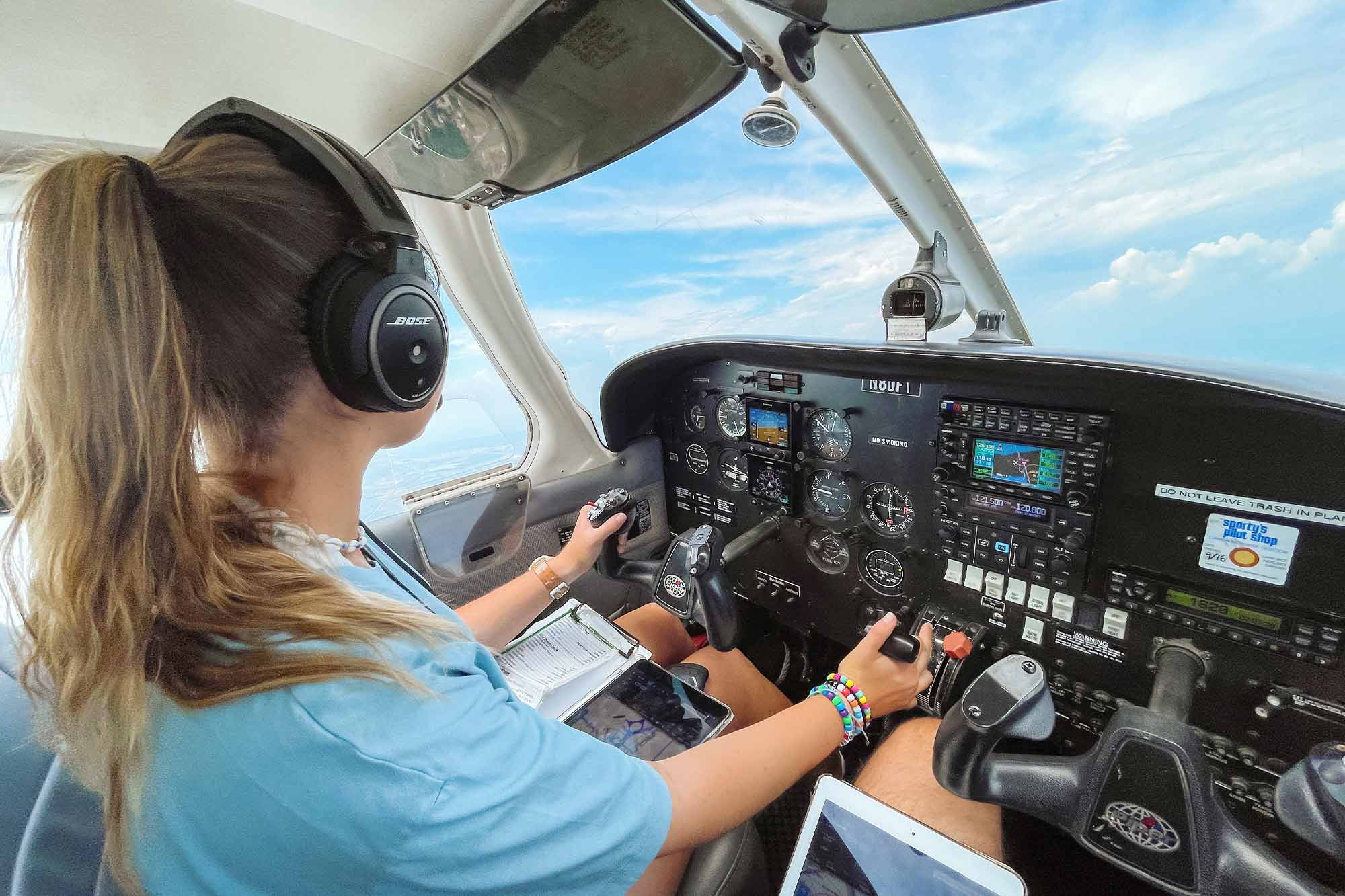
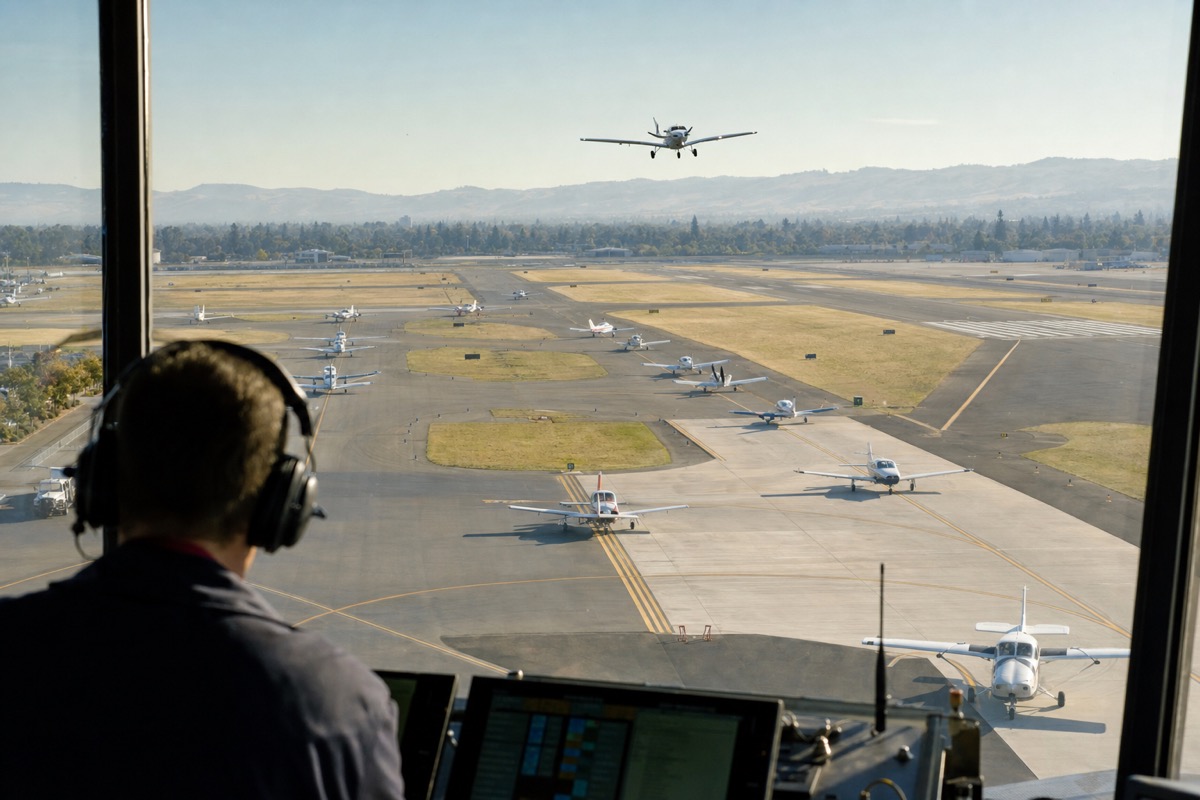
A busy tower frequency can feel like trying to join a conversation that is already moving too fast. You hear overlapping calls, clipped transmissions, "standby," and the constant fear of saying the wrong thing at the wrong time.
Frequency congestion is normal at Class D and Class C airports — especially on nice VFR weekends. The pilots who sound calm are not magically more talented. They have a timing system.
This guide gives you that system: when to call, when to wait, how to keep transmissions short, and what to do when ATC is saturated.
What "frequency congestion" really means
Congestion is not just "a lot of airplanes." It is any situation where:
- Multiple aircraft need ATC attention at once
- Transmissions start overlapping ("stepping on" each other)
- ATC is issuing long instructions with little silence between calls
- You cannot find a clean break to check in
Your job is not to force your way onto frequency. Your job is to communicate clearly with minimum time on the mic.
The golden rule: listen longer than you talk
Before every transmission on a busy frequency:
- Listen for at least 5–10 seconds
- Make sure no one is mid-exchange with ATC
- Wait for a natural pause after a completed readback
- Then key up with a short, complete call
If you hear ATC talking — or a pilot reading back — do not transmit.
Blocking a clearance or a readback creates more congestion and can create a safety issue.
When to call (and when to wait)
Call now when: - You are at the hold-short line, ready, and ATC is waiting on you - You need to reject an unsafe clearance ("unable") - You have an urgency / emergency - ATC called you first and is expecting a reply
Wait when: - Two other aircraft are in an active exchange - ATC just started a long taxi or IFR clearance - You hear "standby" directed at you (unless they call you back) - You are still sorting your own script on the kneeboard
Professional habit: if your call can wait 20 seconds without affecting safety, let the frequency breathe.
Keep every transmission short
Busy frequencies punish long stories.
Too long "City Tower, good afternoon, Cessna 1234 Bravo is a blue-and-white Skyhawk on the west ramp near the fuel pumps, we have Information Golf, we are planning pattern work for about 45 minutes if that works for you, and we would like to taxi when you have a chance, thank you so much."
Right length "City Tower, Cessna 1234 Bravo, west ramp, Information Golf, closed traffic, taxi."
Same information. Fraction of the airtime.
Short-call formula for towered airports 1. Who you are calling 2. Who you are 3. Where you are 4. What you have (ATIS) 5. What you want
Then stop talking.
How to handle "standby"
"Standby" means: I heard you. Do not keep talking. I will get back to you.
What to do - Stay on frequency - Continue listening - Be ready with a short reply - Do not re-call every 10 seconds
What not to do - "Tower, Cessna 34 Bravo, just checking if you still have us…" - Re-stating your whole request while they are busy - Switching frequencies because you feel ignored
If a long time passes and safety requires an update (for example, you can no longer hold position), make one concise call:
"Tower, Cessna 34 Bravo, still holding short runway 27, ready."
Blocked transmissions and "say again"
On congested frequencies, blocked calls are common.
If ATC says "blocked" or you hear a squeal - Wait - Do not immediately retransmit on top of others - When there is a pause, make a clean short call again
If you missed the instruction Use precise requests:
- "Say again, Cessna 34 Bravo."
- "Say again all after taxi, Cessna 34 Bravo."
- "Confirm runway 27, Cessna 34 Bravo."
Specific "say again" requests save everyone time.
Technique: the waiting hole
Experienced pilots look for a "hole" — a short silence after a completed exchange.
Pattern to listen for: 1. ATC issues instruction 2. Pilot completes readback 3. Brief silence 4. That is your hole
Jumping into the middle of step 1 or 2 is how students get stepped on — and how they step on others.
Class D vs Class C congestion differences
Class D (towered GA airports) - Often pattern traffic + taxi + inbound arrivals mixed together - Controllers expect concise VFR calls - Weekend afternoons can be nonstop
Tip: Have your taxi request and pattern intentions ready before you leave the ramp.
Class C - More sequencing, more traffic calls, faster cadence - Approach/Departure may be even busier than Tower - You may get "remain clear" or delay instructions
Tip: Copy ATIS early, set frequencies early, and expect abbreviated instructions. Read back the critical items cleanly and get off the mic.
Scripts for common busy-frequency moments
Initial call when it is packed "Metro Tower, Cessna 1234 Bravo, 8 miles south, Information Delta, inbound full stop."
Ready for departure with aircraft on final Wait until the exchange with the arrival finishes, then:
"Metro Tower, Cessna 34 Bravo, ready runway 27."
You got stepped on Pause, then:
"Metro Tower, Cessna 34 Bravo."
If they respond "go ahead," deliver the short request immediately.
ATC is rapid-fire and you need a second You can still take one breath before keying up. A clean readback beats an instant messy one.
Mentally prepare before you enter the frequency
Congestion feels worse when you are composing the call while already on frequency.
Before switching to Tower/Ground: 1. Write your call 2. Set volume / squelch 3. Identify the flow (who is talking, what phase) 4. Decide your first transmission 5. Switch and listen
Chair-flying this sequence at home dramatically lowers stress.
Practice for busy airspace without burning Hobbs time
You cannot learn timing only from a quiet nontowered field.
Useful practice: - Listen to LiveATC from busy Class D/C airports at peak times - Count the pauses and practice inserting a mock call in the holes - Practice 10-second versions of your standard requests - Use an app like ATC One to rehearse short calls, standbys, and rapid clearances with feedback
The goal is automatic brevity. When the frequency is saturated, you should not be inventing phraseology in real time.
Quick do / don't list
Do: - Listen first - Keep calls short - Read back critical items - Accept "standby" calmly - Ask for a specific "say again" when needed
Don't: - Step on active exchanges - Tell your life story on initial contact - Re-call repeatedly after standby - Guess missing numbers - Apologize at length for normal congestion
Conclusion
Frequency congestion is not a sign you are in the wrong place as a student pilot. It is a sign you are flying where other people also want to fly.
The pilots who sound professional on a packed frequency do three things well: 1. They wait for the hole 2. They say only what matters 3. They get off the mic
Action item: This week, listen to 20 minutes of a busy tower on LiveATC. Every time you hear a clean pause after a readback, say your own short taxi or inbound call out loud. Then practice the same calls in ATC One until brevity feels natural.