July 25, 2026
SafetyReadback techniques that prevent errors
A complete readback is your last safety net before a wrong runway, altitude, or hold-short instruction becomes a real problem. Learn exactly what to read back — and what you can leave out.
A complete guide covering everything you need to know. Estimated reading time: 11 min read.
A bad readback is one of the fastest ways a small radio mistake becomes a runway incursion, altitude bust, or wrong-airport landing.
Controllers give clearances assuming you will catch and confirm the critical details. Your readback is the last safety net before those details become your plan.
This guide shows you exactly what must be read back, what can be shortened, a 5-second mental checklist, and the mistakes that catch student pilots every day.
Why readbacks exist
ATC is not testing your memory for fun. Readbacks exist because:
- Radios are imperfect — blocked transmissions, accents, and noise create misunderstandings
- Numbers sound alike — "two seven" and "zero niner," "climb" and "maintain," runway 9 vs 27
- Two brains beat one — if ATC hears a wrong readback, they can correct you before you act
- Liability and safety — a correct readback proves both sides shared the same plan
If you only remember one rule: read back the items that can kill you if wrong.
The "must read back" list
These items are non-negotiable. If ATC said them, you say them back:
1. Runway assignments - Taxi to runway - Line up and wait - Cleared for takeoff - Cleared to land - Cleared for the option - Circling instructions involving a runway
Wrong: "Cleared to land, Cessna 34 Bravo."
Right: "Cleared to land runway 27, Cessna 34 Bravo."
2. Hold short instructions Always include the runway (or taxiway) you are holding short of.
Wrong: "Hold short, Cessna 34 Bravo."
Right: "Hold short runway 9 Right, Cessna 34 Bravo."
3. Altitude assignments - Climb / descend / maintain - Altitude restrictions ("cross XYZ at or below…") - VFR altitude advisories that are instructions, not suggestions
Right: "Climb and maintain 4,500, Cessna 34 Bravo."
4. Heading and course changes - Assigned headings - Turn directions when specified - Vectors that change your path
Right: "Turn left heading 180, Cessna 34 Bravo."
5. Frequency changes - Contact / monitor instructions - New frequency numbers
Right: "Contact Tower 118.3, Cessna 34 Bravo."
6. Transponder codes Right: "Squawk 4532, Cessna 34 Bravo."
7. Clearance limits and hold instructions - Hold short of a runway or taxiway - Hold at a fix (IFR) - "Cleared as filed" still needs the key elements confirmed when issued as a full clearance
What you can shorten (safely)
You do not need to parrot every word ATC says.
Acknowledgments that can be short - Altimeter settings: "Altimeter 30.12, Cessna 34 Bravo." - Traffic calls you already have in sight: "Traffic in sight, Cessna 34 Bravo." - Simple "continue" / "report midfield" style instructions: include the key action + callsign
Things you usually do NOT need to invent - Weather commentary - "With you" - Long thank-yous - Re-stating your full life story
Goal: confirm the safety-critical numbers and instructions, then get off the frequency.
The 5-second readback checklist
Before you key the mic, run this mental list:
- Runway? Did they assign, clear, or hold short of one?
- Altitude? Climb, descend, maintain, restriction?
- Heading / route? Turn, vector, or routing change?
- Hold short / stop? Anything that keeps you from moving into conflict?
- Frequency / squawk? New numbers to dial?
If the answer to any is yes, that item goes in the readback.
Then add your callsign at the end (standard U.S. practice for most pilot readbacks).
Real examples: wrong vs right
Taxi with hold short
ATC: "Cessna 1234 Bravo, taxi to runway 27 via Alpha, Bravo, hold short runway 9 Right."
Bad: "Taxi via Alpha Bravo, Cessna 34 Bravo."
Good: "Taxi runway 27 via Alpha, Bravo, hold short runway 9 Right, Cessna 34 Bravo."
Landing clearance
ATC: "Cessna 34 Bravo, runway 27, cleared to land."
Bad: "Cleared to land."
Good: "Cleared to land runway 27, Cessna 34 Bravo."
Complex departure instruction
ATC: "Cessna 34 Bravo, after departure turn left heading 180, climb and maintain 2,500, departure frequency 124.4, squawk 4213."
Bad: "Left turn, up to 2,500, Cessna 34 Bravo."
Good: "After departure left heading 180, climb maintain 2,500, 124.4, squawk 4213, Cessna 34 Bravo."
Partial readbacks and "say again"
If you missed part of the clearance, do not guess.
Options that work: - "Say again altitude, Cessna 34 Bravo." - "Say again all after Bravo, Cessna 34 Bravo." - "Confirm hold short runway 9 Right, Cessna 34 Bravo."
Guessing a runway or altitude is far more dangerous than asking once.
Common student-pilot readback traps
Trap #1: "Okay" / "Roger" / "Copy" These do not confirm the critical details. ATC cannot verify you heard the correct runway from "okay."
Trap #2: Reading back in the wrong order You do not need a perfect mirror of ATC's sentence, but keep related items together and never drop the runway from a landing/takeoff clearance.
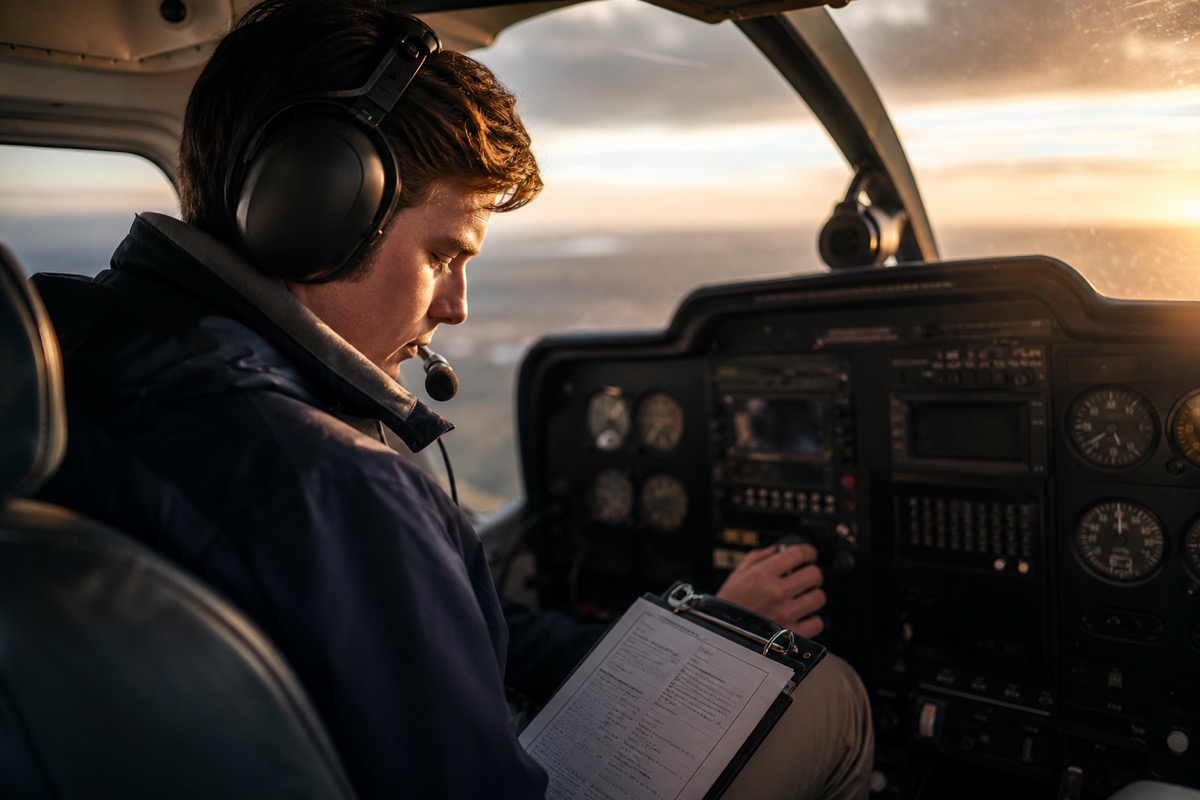
Trap #3: Stepping on the frequency Write the clearance on your kneeboard first, then transmit. A messy readback often happens because pilots key up while still decoding.
Trap #4: Correcting yourself poorly If you catch an error mid-readback:
Use: "Correction, runway 27, Cessna 34 Bravo."
Not a long apology.
Trap #5: Accepting what you cannot do If the instruction is unsafe or impossible:
Use: "Unable, Cessna 34 Bravo." or "Unable immediate turn, request heading 200, Cessna 34 Bravo."
A clean "unable" is professional. A silent attempt to comply with an unsafe clearance is not.
A simple kneeboard habit that works
Create a tiny readback block on your kneeboard:
- RWY: ____
- ALT: ____
- HDG: ____
- H/S: ____
- FREQ / XPDR: ____
As ATC speaks, fill blanks. Your readback becomes reading your notes — not inventing from memory under stress.
How to practice readbacks on the ground
Readbacks are a skill. Practice them like pattern work.
- Listen to LiveATC at a busy tower for 15 minutes
- Pause after each clearance and say the full readback out loud
- Compare what you said with what the real pilot said
- Repeat the same clearance until your version is clean and complete
Apps like ATC One are especially useful here: you get realistic clearances and can practice full readbacks with immediate feedback, without burning flight hours.
Quick reference card
Always read back: - Runways - Hold shorts - Altitudes - Headings / critical route changes - Frequencies - Squawk codes
Keep short: - Altimeter - Traffic in sight - Simple report requests
Never guess: - Say again - Confirm - Unable
Conclusion
Great pilots are not the ones who never miss a word. They are the ones who never let a critical number go unverified.
Your readback is not paperwork. It is a safety loop between you and ATC.
Action item: On your next three flights, write every runway, altitude, heading, hold short, frequency, and squawk before you transmit. Then read the card. After those three flights, the checklist will start running automatically in your head.